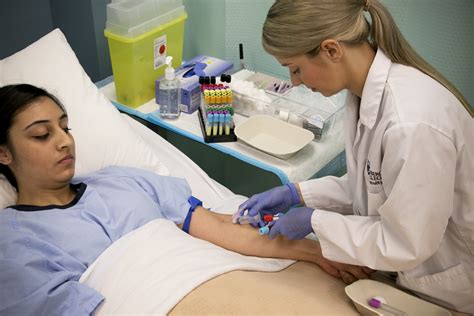
In today’s healthcare field, phlebotomists play a crucial role in the management and treatment of patients. These skilled professionals are responsible for drawing blood samples for testing, transfusions, or research purposes. If you are interested in pursuing a career as a phlebotomist, it’s important to understand what it takes to excel in this field. In this comprehensive guide, we will explore the requirements, training, skills, and career outlook for aspiring phlebotomists.
**What Does It Take To Be A Phlebotomist:**
**1. Education and Training:**
Becoming a phlebotomist typically requires a high school diploma or GED. While some employers may hire phlebotomists with on-the-job training, most healthcare facilities prefer candidates who have completed a phlebotomy training program. These programs are offered by community colleges, vocational schools, and healthcare organizations. Courses typically cover topics such as medical terminology, anatomy, physiology, and phlebotomy techniques.
**2. Certification:**
Although certification is not always required, becoming a certified phlebotomist can increase your job prospects and earning potential. The most common certification for phlebotomists is provided by the National Healthcareer Association (NHA) or the American Society for Clinical Pathology (ASCP). To become certified, you must pass an exam that tests your knowledge and skills in phlebotomy.
**3. Skills and Qualities:**
To excel as a phlebotomist, you will need a combination of technical skills and personal qualities. Some essential skills for phlebotomists include:
– Excellent hand-eye coordination
– Attention to detail
– Strong communication skills
– Empathy and compassion
– Ability to work under pressure
– Knowledge of safety protocols
**4. Job Outlook and Salary:**
The demand for phlebotomists is expected to grow in the coming years as the healthcare industry continues to expand. According to the Bureau of Labor Statistics, employment of phlebotomists is projected to grow 17% from 2019 to 2029, much faster than the average for all occupations. The median annual wage for phlebotomists was $36,480 in May 2020.
**5. Benefits and Practical Tips:**
– Phlebotomy is a rewarding career that allows you to make a difference in patients’ lives.
– Stay updated on industry trends and technology to enhance your skills.
– Join professional organizations like the American Society for Clinical Laboratory Science to network with other phlebotomists.
– Consider furthering your education to advance your career, such as pursuing a degree in medical laboratory science.
**Conclusion:**
Becoming a phlebotomist requires dedication, training, and a passion for helping others. By completing a phlebotomy training program, obtaining certification, and honing your skills, you can embark on a fulfilling career in healthcare. With a positive job outlook and opportunities for advancement, a career as a phlebotomist offers a promising future for those willing to put in the work. If you have a passion for healthcare and enjoy working with patients, consider pursuing a career as a phlebotomist.
